Should You Staple Your Resume? (What Recruiters Really Expect)
Should you staple your resume—or does it hurt your chances? Even small presentation details matter. This guide explains when stapling is acceptable, when it’s a mistake, and what recruiters expect today.

Sarah
Head of Content
Dec 28, 2025
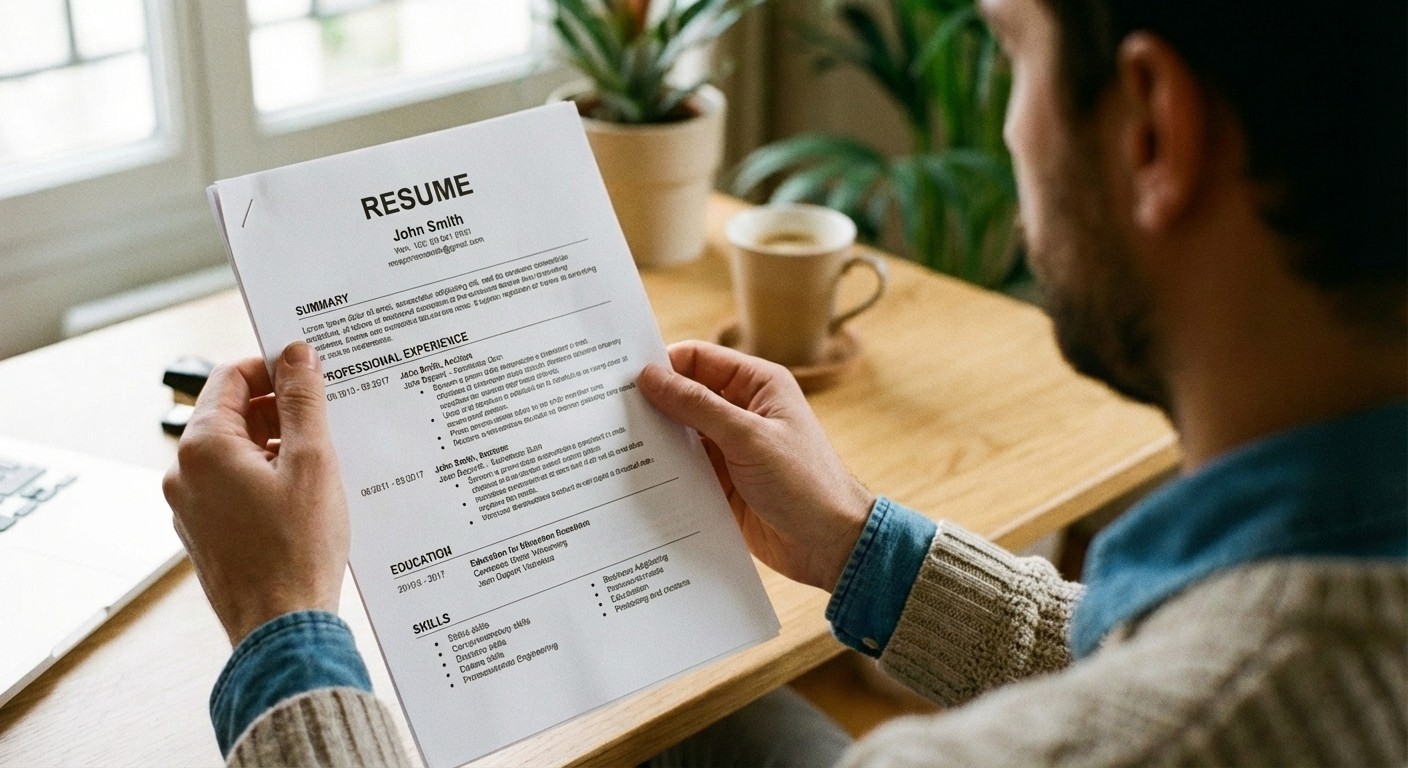
When preparing a resume, most candidates focus on content: skills, experience, keywords. But a surprisingly common question still comes up:
Should you staple your resume?
It may seem trivial, yet this small decision can influence how your application is perceived—especially in traditional hiring processes. In this article, we’ll clarify when stapling a resume is acceptable, when it’s a mistake, and what modern recruiters actually expect today.
Why This Question Still Matters
Although most resumes are now submitted digitally, paper resumes haven’t completely disappeared. They’re still used in:
Job fairs
Walk-in applications
Interviews with printed copies
Administrative or government roles
Conservative industries (law, finance, academia)
In these contexts, presentation signals professionalism, attention to detail, and awareness of hiring norms—just like other seemingly small choices candidates worry about, such as do resume needs periods or whether punctuation consistency really matters.
The Short Answer: No, You Should Not Staple Your Resume
In most cases, you should avoid stapling your resume.
Recruiters and hiring managers often need to:
Scan documents quickly
Separate pages for copying or scanning
Digitize resumes into Applicant Tracking Systems (ATS)
A stapled resume slows this process and can create unnecessary friction.
Recruiter Perspective
From a recruiter’s standpoint, staples:
Damage scanners
Add extra handling time
Increase the risk of torn pages
Even small inconveniences matter when reviewing dozens—or hundreds—of applications.
When Is Stapling a Resume Acceptable?
There are very limited situations where stapling may be acceptable:
1. Academic or Research Applications
In academia, multi-page CVs are common. If instructions explicitly request a stapled document, follow them.
2. Formal Exams or Administrative Submissions
Some public institutions still require stapled documents for record-keeping.
Rule of thumb: Only staple your resume if the employer explicitly asks for it.
Better Alternatives to Stapling
If you’re submitting a physical resume, here are safer options:
✔ Paper Clip
Easy to remove
Does not damage paper
Recruiter-friendly
✔ Folder or Resume Sleeve
Ideal for interviews
Protects the document
Looks polished and professional
❌ Binder, Fancy Clips, or Covers
Avoid anything bulky or decorative. Simplicity wins.
What About Digital Resumes?
If you’re submitting your resume online, stapling is irrelevant—but formatting is critical.
Key digital best practices:
Use PDF format unless instructed otherwise
Avoid tables, text boxes, and graphics that break ATS parsing
Keep a clean, single-column layout
This is where many candidates unknowingly fail.
A well-designed resume isn’t just visually clean—it’s technically readable by hiring software.
If you want to ensure your resume is both ATS-friendly and recruiter-approved, using a professional resume creation tool can help standardize formatting without sacrificing clarity.
Small Details Reflect Big Professionalism
Recruiters often judge resumes in seconds. Small details—like staples, formatting inconsistencies, or unclear structure—can subconsciously affect perception.
Attention to detail signals:
Professional maturity
Respect for the hiring process
Awareness of modern recruitment standards
Your resume is not just a document—it’s a work sample.
Final Verdict
Do not staple your resume.
Unless explicitly requested:
Use a paper clip for physical copies
Use a clean PDF for digital submissions
Focus on clarity, structure, and readability—whether your resume is one page or slightly longer, and regardless of whether your experience is written in past tense or present tense
If you’re unsure whether your resume meets modern hiring expectations, reviewing it with a specialized resume tool can help you catch details most candidates overlook—without overcomplicating the process.
Want to Go Further? Try SuperCandidate!
A resume that looks professional and passes modern screening tools requires more than good content. Structure, formatting, and technical compatibility matter just as much.
That’s why many candidates choose to refine their resume using SuperCandidate designed for today’s hiring systems—saving time while avoiding costly mistakes.
Share on social media